
DIETS
The low-carb diet
Fewer starches and sugars, more protein, vegetables and healthy fats
- Eat plenty of
- Non-starchy vegetables, eggs, fish, meat, dairy, nuts
- Eat some
- Berries, legumes, whole grains in small portions
- Eat less
- Sugar, bread, pasta, rice, potatoes, sugary drinks
- Carbs
- Usually under 130 g a day; very low-carb is under 50 g
What it is
A low-carb diet replaces most sugar and starch with protein, vegetables and fats. There’s no single definition: researchers usually call under 130 g of carbohydrate a day low-carb, and under 50 g very low-carb, which becomes the keto diet. Some people simply cut sugar, bread and pasta without counting.
What to eat
| Food | Carbs per portion | Low-carb? |
|---|---|---|
| Leafy greens, broccoli, zucchini | 2 to 6 g per cup | Yes, freely |
| Eggs, meat, fish, cheese | Under 1 g | Yes |
| Nuts | About 3 to 6 g per handful | Yes, in small amounts |
| Berries | About 10 to 15 g per cup | In moderation |
| Lentils and beans | About 20 g per half cup | In small portions |
| Bread | About 15 g per slice | Limit |
| Rice and pasta | About 40 to 45 g per cup cooked | Limit |
| Soda and juice | About 35 g per can or glass | Avoid |
A sample day
Low-carb, one day
- BreakfastScrambled eggs with spinach and mushrooms
- LunchChicken salad with avocado, seeds and olive oil
- SnackGreek yogurt with a few berries
- DinnerGrilled fish with broccoli and a small portion of lentils
What the research found
Key study
Low-carb and low-fat tied
- Randomized trial
- 609 adults
- 12 months
Adults with overweight followed a healthy low-carb or a healthy low-fat diet, both focused on whole foods. After a year, the low-carb group had lost 6.0 kg and the low-fat group 5.3 kg on average, a difference too small to matter. Neither genes nor insulin levels predicted who did better on which diet.
Key study
The same weight lost after two years
- Randomized trial
- 307 adults with obesity
- 2 years
Both groups lost about 7 kg after two years, with group support. The low-carb group had a larger rise in HDL (“good”) cholesterol, and more side effects such as bad breath, constipation and hair loss in the first months.
A review of 48 diet trials came to the same conclusion: low-carb and low-fat programs led to similar weight loss at 6 and 12 months 3. In type 2 diabetes, a review of 23 trials found that more people reached remission (blood sugar back below the diabetes range) after 6 months on a low-carb diet, though the advantage was smaller and less certain at 12 months 4.
Good for
- People who feel fuller with more protein and fat
- Cutting sugar and refined snacks
- Some people with type 2 diabetes, with their doctor
Watch out for
- Missing fiber if you cut whole grains, fruit and legumes
- Eating out and social meals are harder
- Weight can come back if old habits return
- Constipation in the first weeks
How to start
Five first steps
- Cut sugary drinks, sweets and white bread first: that alone removes a lot of carbohydrate.
- Build each meal around a protein food and two vegetables.
- Keep some carbs from legumes, berries and whole grains for fiber.
- Use olive oil, nuts and avocado rather than processed meats for fat.
- Drink plenty of water, especially in the first week.
Common mistakes
- Replacing bread with processed meat and cheese at every meal.
- Cutting vegetables along with carbs: most vegetables are very low in carbohydrate.
- Eating “low-carb” snack bars and sweets that are high in calories.
- Expecting the quick drop of the first week, mostly water, to continue.
With an eating window
Questions
How many carbs a day is low-carb?
Usually under 130 g a day. Under 50 g is very low-carb, or ketogenic. Many people start around 100 g and adjust.
Why do I lose weight so fast in the first week?
Cutting carbs empties your body’s glycogen stores, which hold water. Much of the first week’s loss is water; fat loss is slower and steadier.
Sources
- Gardner CD, Trepanowski JF, Del Gobbo LC, et al. Effect of Low-Fat vs Low-Carbohydrate Diet on 12-Month Weight Loss in Overweight Adults and the Association With Genotype Pattern or Insulin Secretion: The DIETFITS Randomized Clinical Trial. JAMA. 2018;319(7):667-679. doi.org/10.1001/jama.2018.0245
- Foster GD, Wyatt HR, Hill JO, et al. Weight and Metabolic Outcomes After 2 Years on a Low-Carbohydrate Versus Low-Fat Diet: A Randomized Trial. Ann Intern Med. 2010;153(3):147-157. doi.org/10.7326/0003-4819-153-3-201008030-00005
- Johnston BC, Kanters S, Bandayrel K, et al. Comparison of Weight Loss Among Named Diet Programs in Overweight and Obese Adults: A Meta-analysis. JAMA. 2014;312(9):923-933. doi.org/10.1001/jama.2014.10397
- Goldenberg JZ, Day A, Brinkworth GD, et al. Efficacy and safety of low and very low carbohydrate diets for type 2 diabetes remission: systematic review and meta-analysis of published and unpublished randomized trial data. BMJ. 2021;372:m4743. doi.org/10.1136/bmj.m4743
MAKE IT A HABIT
Any diet.
Your eating window.
Fasting Tracker is a free intermittent fasting app for iPhone, iPad and Apple Watch.
Download Fasting Tracker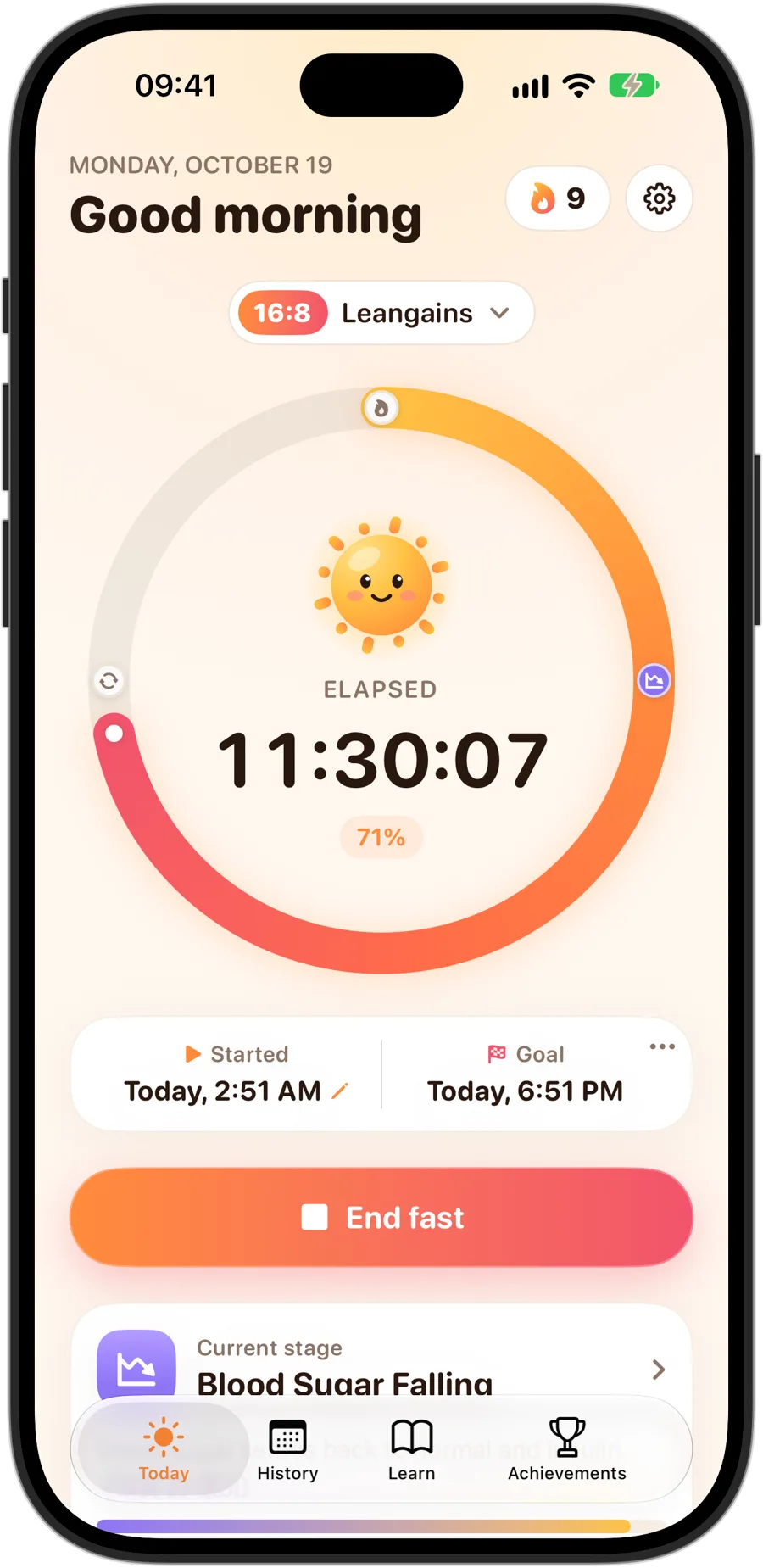
dieting.app is general information, not medical advice. If you are pregnant or breastfeeding, have diabetes, kidney disease or a history of eating disorders, or take medication, talk to your doctor before changing how you eat.