
DIETS
The high-protein diet
More protein at every meal, to stay full and keep muscle while you lose fat
- Eat plenty of
- Fish, poultry, eggs, Greek yogurt, cottage cheese, tofu, legumes
- Eat some
- Whole grains, fruit, nuts and healthy fats
- Eat less
- Sugary and processed snacks that are low in protein
- Protein
- About 1.2 to 1.6 g per kilo a day while losing weight
What it is
A high-protein diet isn’t a single plan: it’s a habit of building every meal around a protein food. Protein keeps you full for longer than carbohydrates or fat, takes more energy to digest, and, when you eat less, helps your body hold on to muscle. The minimum for adults is 0.8 g per kilo a day; while losing weight, 1.2 to 1.6 g works better 1. Fasting Tracker’s protein calculator works out your grams a day.
Protein in common foods
| Food | Portion | Protein |
|---|---|---|
| Chicken breast | 100 g cooked | About 30 g |
| Salmon or tuna | 100 g | About 22 to 25 g |
| Greek yogurt | 200 g | About 18 to 20 g |
| Cottage cheese | 150 g | About 17 g |
| Eggs | 2 large | About 12 g |
| Tofu | 150 g | About 15 to 20 g |
| Lentils | 1 cup cooked | About 18 g |
| Almonds | 30 g | About 6 g |
A sample day
High-protein, one day (about 110 g)
- BreakfastGreek yogurt with oats, berries and seeds (about 25 g)
- LunchChicken, quinoa and roasted vegetable bowl (about 40 g)
- SnackCottage cheese with pineapple (about 15 g)
- DinnerTofu or fish stir-fry with vegetables and brown rice (about 30 g)
What the research found
Key study
More fat lost, more muscle kept
- Meta-analysis
- 24 trials, 1,063 adults
- About 12 weeks
On diets with the same calories, people who ate more protein lost about 0.8 kg more weight and 0.9 kg more fat, and kept about 0.4 kg more lean mass, than those who ate standard amounts of protein.
Key study
Less hunger without trying
- Controlled feeding study
- 19 adults
- About 14 weeks
When protein rose from 15% to 30% of calories, people spontaneously ate about 440 fewer calories a day when allowed to eat as much as they wanted, and lost about 5 kg in 12 weeks, without being asked to eat less.
If you also do strength training, extra protein adds to the gains in muscle and strength, with little further benefit above about 1.6 g per kilo a day 4.
Good for
- Losing weight without losing muscle
- People who train or are getting older
- Anyone who gets hungry on a diet
Watch out for
- It can cost more
- Lots of red and processed meat isn’t the healthy way to do it
- Not suitable with kidney disease
How to start
Five first steps
- Work out your target in grams: your weight in kilos times 1.2 to 1.6.
- Split it across meals: about 25 to 40 g each.
- Start the day with protein: eggs, Greek yogurt or cottage cheese.
- Keep easy protein snacks: yogurt, boiled eggs, edamame, a glass of milk.
- Mix plant proteins in: lentils, beans, tofu and tempeh bring fiber too.
Common mistakes
- Relying on protein bars and shakes that are high in sugar.
- Getting most protein from processed meats.
- Forgetting vegetables and fiber.
- Going far above 2 g per kilo, which adds calories and cost without more benefit.
With an eating window
Questions
How much protein do I need to lose weight?
About 1.2 to 1.6 g per kilo of body weight a day, spread over your meals 1. For someone who weighs 70 kg, that’s about 85 to 110 g.
Is a high-protein diet bad for your kidneys?
In healthy people, the amounts above haven’t been shown to harm the kidneys. If you have kidney disease, your doctor may recommend less protein.
Can I get enough protein without meat?
Yes: eggs, dairy, tofu, tempeh, lentils, beans and seitan all provide plenty. Mixing sources over the day helps.
Sources
- Leidy HJ, Clifton PM, Astrup A, et al. The role of protein in weight loss and maintenance. Am J Clin Nutr. 2015;101(6):1320S-1329S. doi.org/10.3945/ajcn.114.084038
- Wycherley TP, Moran LJ, Clifton PM, et al. Effects of energy-restricted high-protein, low-fat compared with standard-protein, low-fat diets: a meta-analysis of randomized controlled trials. Am J Clin Nutr. 2012;96(6):1281-1298. doi.org/10.3945/ajcn.112.044321
- Weigle DS, Breen PA, Matthys CC, et al. A high-protein diet induces sustained reductions in appetite, ad libitum caloric intake, and body weight despite compensatory changes in diurnal plasma leptin and ghrelin concentrations. Am J Clin Nutr. 2005;82(1):41-48. doi.org/10.1093/ajcn/82.1.41
- Morton RW, Murphy KT, McKellar SR, et al. A systematic review, meta-analysis and meta-regression of the effect of protein supplementation on resistance training-induced gains in muscle mass and strength in healthy adults. Br J Sports Med. 2018;52(6):376-384. doi.org/10.1136/bjsports-2017-097608
MAKE IT A HABIT
Any diet.
Your eating window.
Fasting Tracker is a free intermittent fasting app for iPhone, iPad and Apple Watch.
Download Fasting Tracker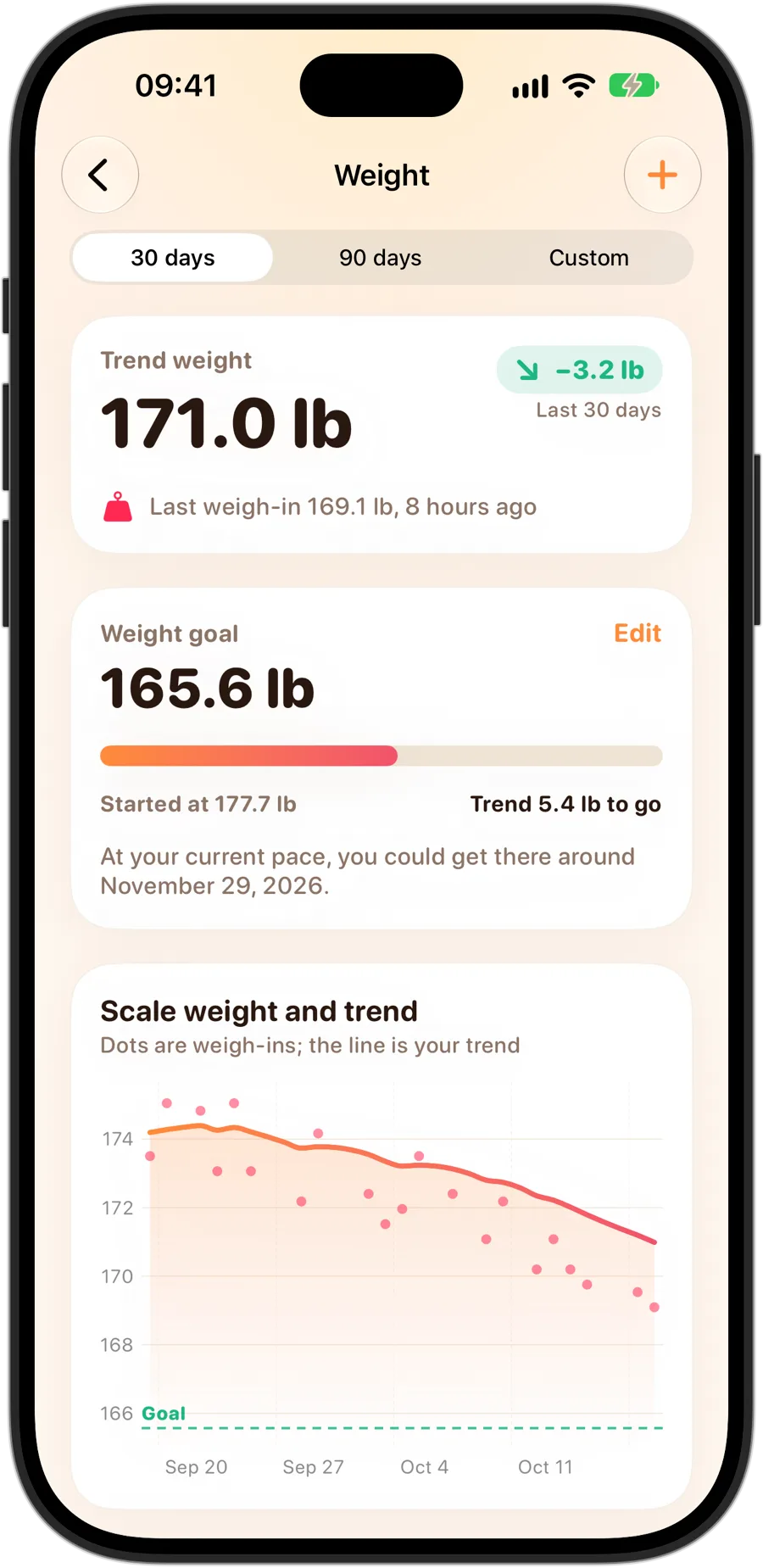
dieting.app is general information, not medical advice. If you are pregnant or breastfeeding, have diabetes, kidney disease or a history of eating disorders, or take medication, talk to your doctor before changing how you eat.