
DIETS
The Mediterranean diet
Vegetables, olive oil, legumes, fish and nuts: the eating pattern with some of the strongest evidence for heart health
- Eat plenty of
- Vegetables, fruit, legumes, whole grains, nuts, olive oil
- Eat often
- Fish and seafood, yogurt, cheese, eggs
- Eat less
- Red and processed meat, sweets, sugary drinks, refined grains
- Calories
- Not counted, unless you want to lose weight
What it is
The Mediterranean diet describes how people traditionally ate in Greece, southern Italy and Spain in the 1950s and 1960s, when researchers noticed their low rates of heart disease. It isn’t a set menu: most of each plate is plants, the main fat is olive oil, fish appears more often than meat, and meals are shared and unhurried. Wine with meals is part of the tradition, but no health organization recommends starting to drink for your health.
What to eat
| Food group | How often | Examples |
|---|---|---|
| Vegetables | Every meal | Tomatoes, leafy greens, peppers, eggplant, onions |
| Fruit | Every day | Oranges, grapes, figs, apples, berries |
| Whole grains | Most meals | Whole-grain bread, bulgur, oats, brown rice, whole-wheat pasta |
| Legumes | 3 or more times a week | Lentils, chickpeas, white beans, hummus |
| Nuts and seeds | Most days, a handful | Almonds, walnuts, pistachios, sesame |
| Olive oil | Every day, as the main fat | For cooking, dressings and bread |
| Fish and seafood | 2 or more times a week | Sardines, salmon, mackerel, mussels |
| Dairy and eggs | Daily, in moderate amounts | Yogurt, feta, eggs |
| Red and processed meat | Rarely | Small portions, a few times a month |
A sample day
Mediterranean, one day
- BreakfastGreek yogurt with berries, walnuts and a little honey
- LunchLentil salad with tomatoes, cucumber, feta and olive oil, with whole-grain bread
- SnackAn apple and a handful of almonds
- DinnerBaked salmon with roasted vegetables, chickpeas and a spoonful of olive oil
What the research found
Key study
Fewer heart attacks and strokes
- Randomized trial
- 7,447 adults at high risk
- About 5 years
In Spain, adults at high cardiovascular risk followed a Mediterranean diet with extra-virgin olive oil or with nuts, or were advised to cut fat. Major cardiovascular events (heart attack, stroke or death from cardiovascular causes) were about 30% lower in both Mediterranean groups. Calories weren’t restricted, so this wasn’t a weight-loss trial. The results were republished in 2018 after a re-analysis, with the same conclusions.
Key study
Better protection after a heart attack
- Randomized trial
- 1,002 adults with heart disease
- 7 years
People who already had coronary heart disease followed either a Mediterranean diet or a low-fat diet. Over seven years, major cardiovascular events were about 25% lower on the Mediterranean diet, with the clearest benefit in men.
An earlier trial in France found similar protection: after a first heart attack, people on a Mediterranean-style diet had far fewer heart attacks and cardiac deaths over about four years than those on a usual prudent diet 3. For weight, a two-year trial in Israel found the Mediterranean diet led to more weight loss than a low-fat diet and about as much as a low-carb diet, and most participants were still following their diet after two years 4.
Good for
- Heart health and long-term eating
- People who like cooking and variety
- Anyone who dislikes strict rules
- Families: everyone eats the same food
Watch out for
- Calories from olive oil and nuts add up quickly if you want to lose weight
- Fresh fish and vegetables can cost more
- It’s vague: you decide what “plenty” means
- Wine isn’t necessary, and isn’t for everyone
How to start
Five first steps
- Cook with olive oil instead of butter or other fats.
- Add a vegetable to every meal, and fill half your plate with them.
- Swap two meat meals a week for fish, and two for beans or lentils.
- Choose whole-grain bread, pasta and rice.
- Keep nuts, fruit and yogurt for snacks instead of sweets and chips.
Common mistakes
- Pouring olive oil freely when you want to lose weight: a tablespoon has about 120 calories.
- Calling pizza and white pasta “Mediterranean”: the traditional diet is mostly vegetables, legumes and whole grains.
- Keeping red and processed meat as the center of the plate.
- Starting to drink wine because it’s part of the tradition.
With an eating window
Questions
Can you lose weight on the Mediterranean diet?
Yes, when you eat fewer calories than you use. In a two-year trial it led to about as much weight loss as a low-carb diet and more than a low-fat diet 4. Watch portions of olive oil, nuts, bread and cheese.
Is the Mediterranean diet good for diabetes?
It’s one of the patterns diabetes organizations commonly suggest: high in fiber and healthy fats, low in refined carbohydrates and sugar. Talk to your doctor before changing your diet if you take medication for diabetes.
Do I have to drink wine?
No. Wine is part of the tradition, but the benefits come from the food. If you don’t drink, don’t start for your health.
Sources
- Estruch R, Ros E, Salas-Salvadó J, et al. Primary Prevention of Cardiovascular Disease with a Mediterranean Diet Supplemented with Extra-Virgin Olive Oil or Nuts. N Engl J Med. 2018;378(25):e34. doi.org/10.1056/NEJMoa1800389
- Delgado-Lista J, Alcala-Diaz JF, Torres-Peña JD, et al. Long-term secondary prevention of cardiovascular disease with a Mediterranean diet and a low-fat diet (CORDIOPREV): a randomised controlled trial. Lancet. 2022;399(10338):1876-1885. doi.org/10.1016/S0140-6736(22)00122-2
- de Lorgeril M, Salen P, Martin JL, et al. Mediterranean Diet, Traditional Risk Factors, and the Rate of Cardiovascular Complications After Myocardial Infarction: Final Report of the Lyon Diet Heart Study. Circulation. 1999;99(6):779-785. doi.org/10.1161/01.CIR.99.6.779
- Shai I, Schwarzfuchs D, Henkin Y, et al. Weight Loss with a Low-Carbohydrate, Mediterranean, or Low-Fat Diet. N Engl J Med. 2008;359(3):229-241. doi.org/10.1056/NEJMoa0708681
MAKE IT A HABIT
Any diet.
Your eating window.
Fasting Tracker is a free intermittent fasting app for iPhone, iPad and Apple Watch.
Download Fasting Tracker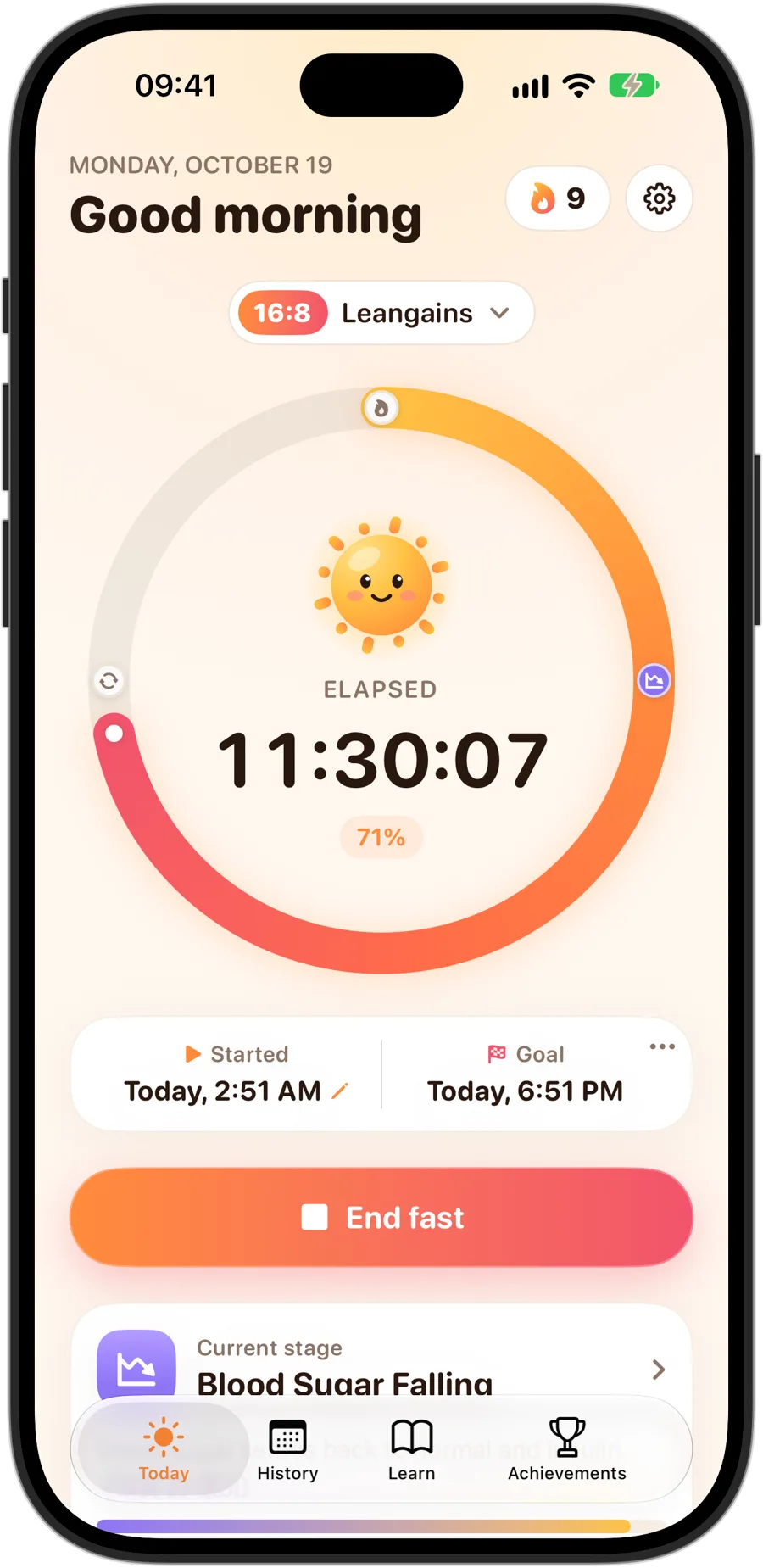
dieting.app is general information, not medical advice. If you are pregnant or breastfeeding, have diabetes, kidney disease or a history of eating disorders, or take medication, talk to your doctor before changing how you eat.